
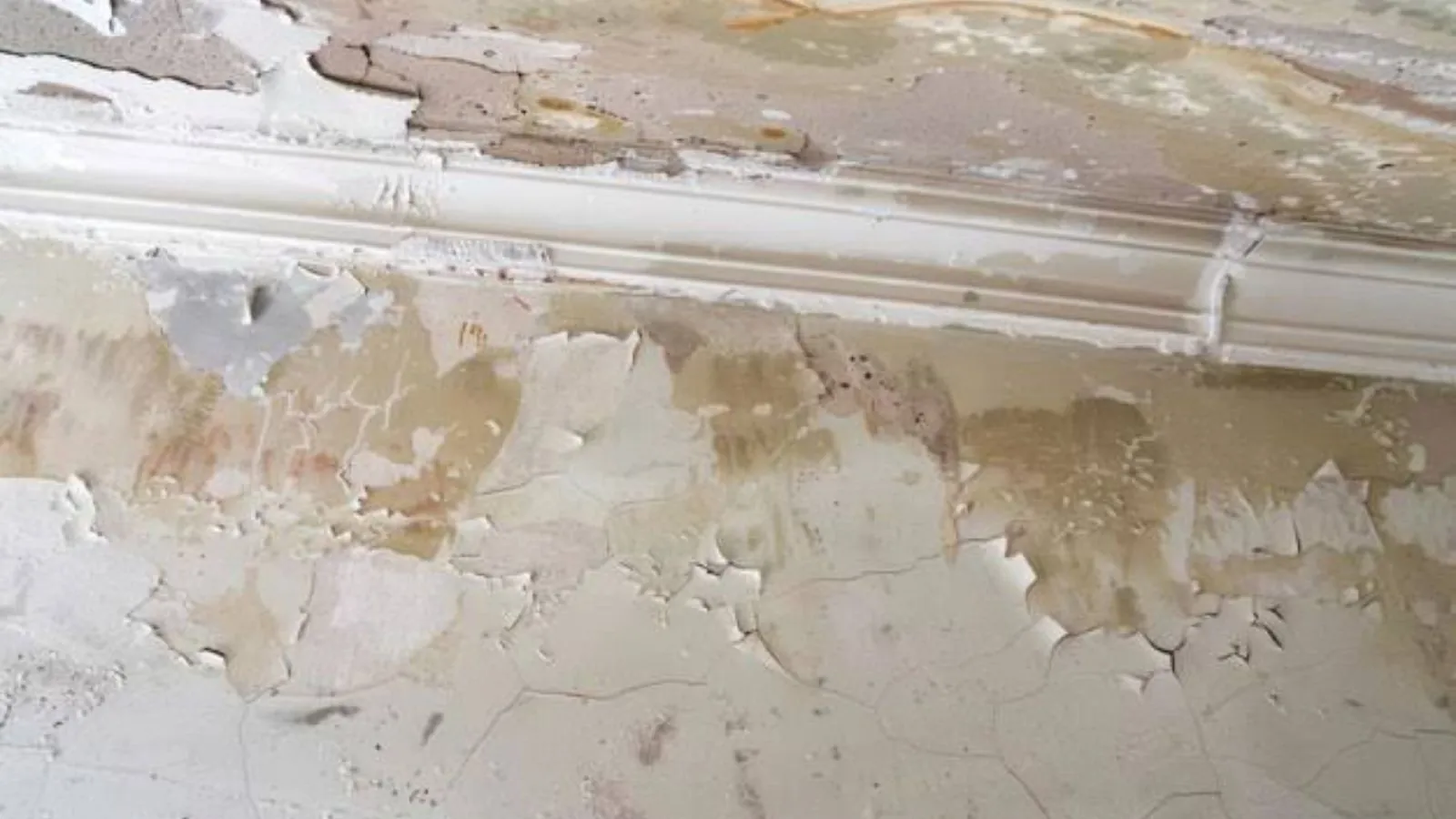
How drywall reacts to water
Drywall is gypsum between paper, and paper holds water. Wet drywall swells, softens and stains, and water can wick upward several inches above the visible line. Paint often hides what is happening until it bubbles or peels.
The published ANSI/IICRC S500 standard is where the dry-in-place or cut-out decision comes from. It relies on moisture readings and the water category, and it supports removing wallboard that stayed wet with contaminated water.
Signs include peeling paint, a soft spot when pressed, a musty smell and stains that return after painting. A moisture meter and thermal camera reveal what your eyes cannot.
| Condition | What it means | Likely action |
|---|---|---|
| Light wicking, clean water, firm board | Moisture only at the surface | Dry in place with monitoring |
| Soft or crumbling board | Material has failed | Cut out and replace |
| Contaminated water | Porous material cannot be cleaned | Remove the affected section |
| Wet insulation inside | Cavity holds water | Open, remove insulation and dry |
What to do before help arrives
Stop the water source first, then turn off the breaker for any circuit that runs through the wet wall if you can do it safely. Do not cut into a wall near wiring or pipes before you know what is behind it.
Do not paint, caulk or cover a wet wall to hide the stain. Sealing in moisture traps it, and a wall that looks dry at the surface can still be wet inside.
Dry in place or cut it out?
Drywall that stayed firm and was wet with clean water can often be dried without removing it. Technicians drill small holes or remove baseboards to send air into the cavity. When the board has softened or the water was contaminated, a flood cut removes a strip above the wet line.
Map the moisture
Meters show how far up and across the wall the water went.
Open if needed
Baseboards come off or a strip is cut so the cavity can dry.
Dry and monitor
Air movers, dehumidifiers and daily readings guide the process.
Plan repairs
The scope lists drywall, texture, paint and trim once the wall is dry.
Walls rarely get wet on their own. The source is usually a burst pipe, a roof leak that came through the ceiling or a storm. The structural drying page explains the equipment used.
Signs a wall is wetter than it looks
Water inside a wall often shows itself in small ways. Paint may feel slightly cool, baseboards may cup at the bottom edge and outlets near the floor can feel damp. A faint musty smell in an otherwise clean room is another clue.
A thermal camera shows cooler wet areas through a finished surface, and a pin or pinless moisture meter confirms them. Readings are taken along the wall at set heights so the same points can be checked every visit.
Why insulation matters in an exterior wall
Exterior walls in older homes around Battle Ground often hold batt insulation that soaks up water and stays wet against the drywall. Wet batts lose their value as insulation and keep the cavity damp for days. In many cases they are removed, the studs are dried, and new insulation goes in after the readings return to normal.
Interior walls usually have less insulation, so they dry faster. The written scope notes which walls were treated in place and which were opened, so a repair contractor can price the rebuild from the page.
What affects the cost
Wall repairs depend on how much has to come out and what finish goes back. Factors include:
- How high the water wicked up the wall
- Whether insulation is wet
- Drywall that must be replaced
- Texture and paint matching
- The days of drying
Call (833) 521-1033 and describe the stain, the wall and where the water came from.
Drywall that was soaked by a sudden pipe failure or storm leak is often covered, and one that stained from a slow leak often is not. Flood damage usually needs separate coverage. Photograph the wall before any section is cut out and read your policy.
Service area
We serve Battle Ground, Yacolt, La Center, Vancouver and Brush Prairie.
Questions people ask
Can I just paint over a water stain?
Painting hides it but does not dry anything. Stains can bleed through, and wet material behind the paint can keep deteriorating.
Do you repair and paint walls?
We handle drying, removal and the written scope. Drywall finishing and painting is handled by a repair crew or a contractor of your choice.
How high does water wick up drywall?
Several inches above the visible line in many cases. A moisture meter finds the actual line.
Is a flood cut always necessary?
No. It is used when drywall has softened or the water was contaminated. Firm, clean-water drywall can often be dried in place.
Do you handle wall water damage after hours in Battle Ground?
Yes. The line is answered 24/7, so call if water is running in a wall.