
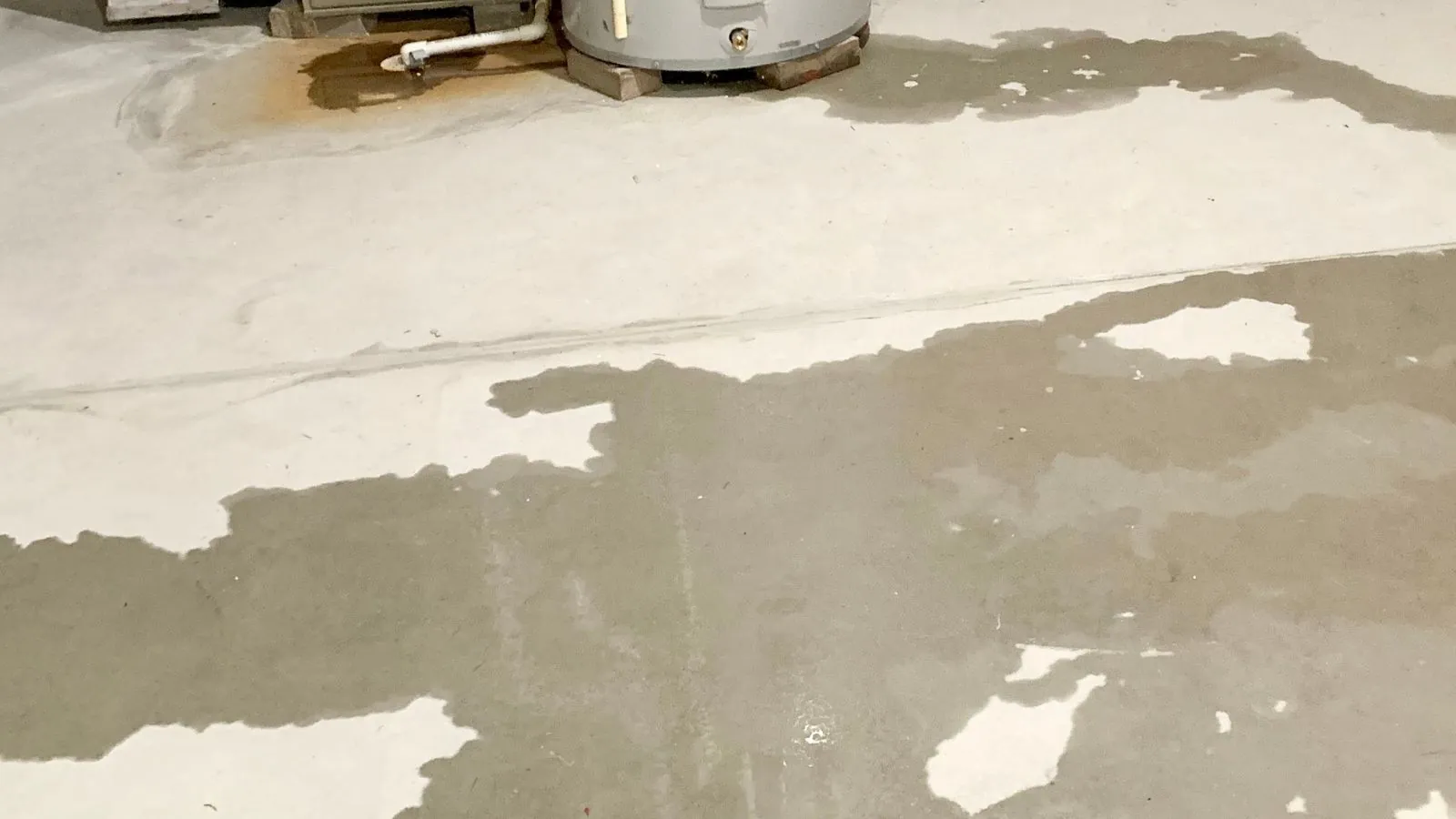
Warm spots, wet flooring and a spinning meter
A slab leak is a leak in a pipe that runs under or inside a concrete slab. Homeowners usually notice the symptoms first: a warm patch on the floor, a musty smell, damp carpet along a wall or a water meter that moves when every tap is off. These are the signs that something is wrong underground.
Because a slab leak can run for weeks, the published ANSI/IICRC S500 standard is a useful reference. It explains that clean water left in contact with building materials can be rated worse than the water that first came out of the pipe.
If water is visibly coming up through the floor, shut off the main valve and call. The line is answered 24/7 and an early call can limit damage to the flooring above.
What to do before help arrives
Shut off the main water valve, then look at the water meter. If the dial keeps moving with every fixture off, water is still escaping somewhere. Do not step into standing water if outlets, cords or appliances are close by.
Do not run a hot floor heating system or try to dig at the slab yourself. Photograph any wet flooring and the meter reading before anything is moved.
When a slab leak is an emergency
A slow slab leak can run for weeks without a flood. It becomes an emergency when water breaks through the floor surface, when flooring buckles or when a hot water line fails and sends heat and moisture through the house. After hours, call the same 24/7 line.
Water and electrical hazards
If water is reaching outlets or baseboard wiring, stay out of the room and switch off the circuit only if you can reach the panel dry.
Hot water slab leaks can scald. Keep children and pets away from wet floors that feel warm.
| Symptom | What it may mean | First step |
|---|---|---|
| Warm spot on a floor | A hot water line leaking under the slab | Shut off the water heater and call |
| Water meter running with taps off | A leak somewhere in the supply | Check the meter and call a leak detection pro |
| Damp carpet near a wall | Water rising through the slab | Lift a small corner and photograph it |
| Musty smell with no visible water | Moisture in the subfloor or slab | Call for a moisture check |
A plumber or a leak detection company finds and fixes the pipe, and we do not do that. We handle the wet flooring, baseboards and walls it leaves behind. The two jobs run side by side, and a clear moisture map helps the plumber find where water is surfacing.
Map the moisture
Meters and a thermal camera show where water is traveling.
Remove wet materials
Wet carpet, pad or flooring that cannot dry in place is removed.
Dry the slab and walls
Equipment dries the slab surface, baseboards and lower walls.
Scope the repair
A written scope separates drying from finish repairs.
What helps the plumber and the drying crew
Write down where the warm spots and damp flooring are, and check the water meter before and after you shut off every fixture. Share those notes with both the leak detection company and the drying crew. A map of where moisture is surfacing helps narrow down where the line is failing.
What affects the cost
A slab leak adds two parts to the bill, finding and fixing the pipe, and drying the damage. For the drying portion, these factors apply:
- How long water has been reaching the floor
- Flooring type, such as carpet, tile, laminate or hardwood
- How far water spread along walls
- How many days of drying the slab needs
- Repairs left after drying
If you suspect a slab leak, call (833) 521-1033 and describe the warm spots or damp flooring.
Coverage for slab leaks varies a lot. A sudden break may be covered for the damage above the slab, while a slow leak over many months often is not. Flood needs a separate policy, and the pipe repair itself may be excluded, so ask your insurer before work starts. Slow leaks are often treated differently from sudden ones, so describe the timeline honestly.
Related pages and service area
Wet flooring is covered under hardwood floor and carpet pages, and the drying process is explained on structural drying. We serve Battle Ground, Yacolt, Brush Prairie, La Center and Vancouver.
Questions people ask
Do you handle slab leak emergencies at night or on weekends in Battle Ground?
Yes. If water is coming through the floor, call at any hour. The line is open 24/7, and the main valve is the first thing to shut while you wait.
How do I know if I have a slab leak?
A warm floor spot, a spinning meter with all fixtures off, a musty smell and damp flooring are common signs. A leak detection company confirms it.
Do you fix the leaking pipe?
No. A plumber or leak detection company repairs the pipe, and we handle the water damage and drying.
Can the slab itself be damaged?
Concrete is durable, but the flooring and subfloor above it can suffer. Chronic moisture can also affect adhesives and wood.
Is a slab leak covered by insurance?
Coverage varies. Sudden leaks are often covered for resulting damage, while slow leaks often are not. The pipe repair itself may be excluded. Ask your insurer before work starts.