
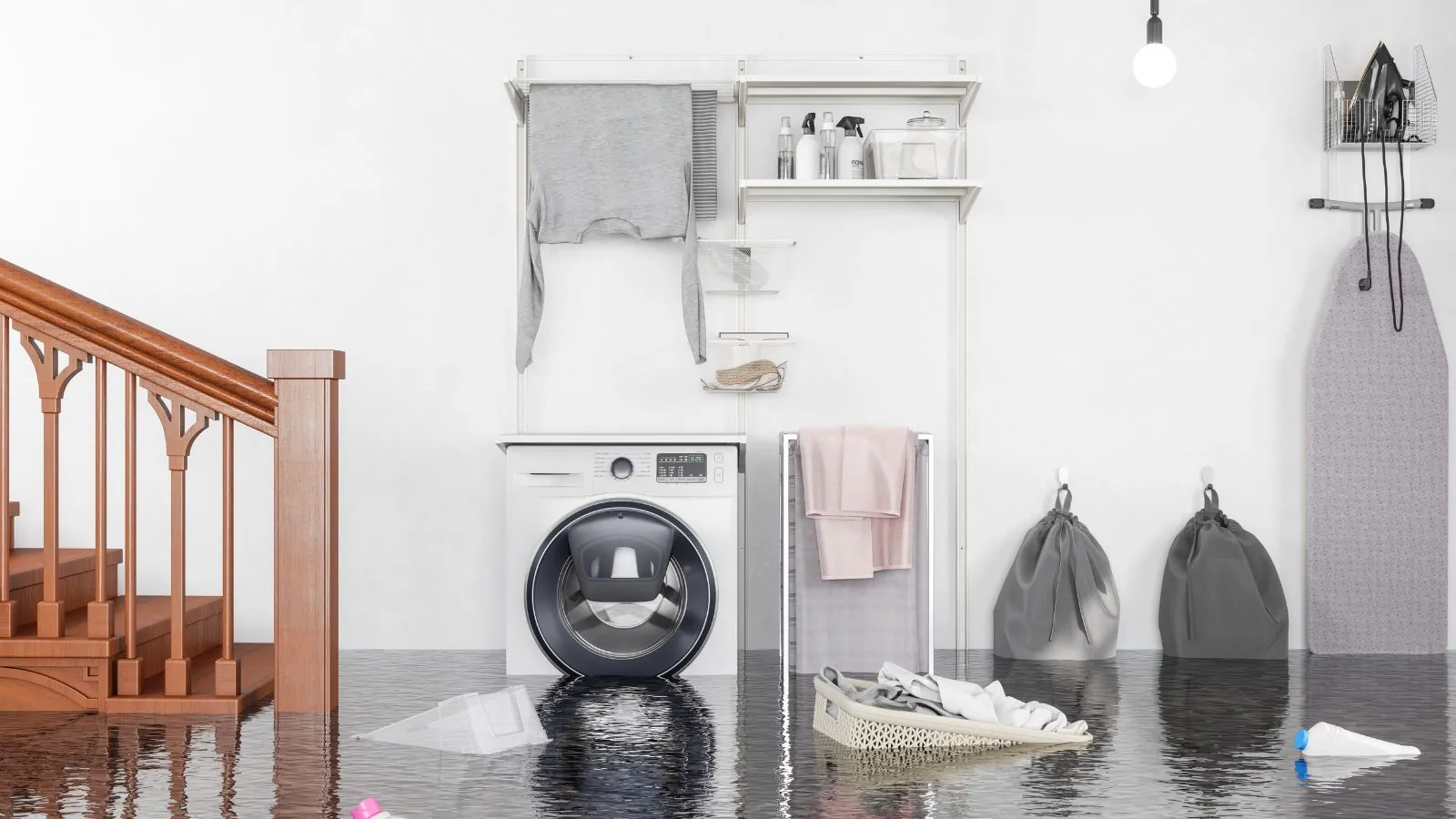
When an appliance leak is an emergency
A burst washer hose can release gallons in minutes, while a slow dishwasher leak can rot a subfloor over months. The phone line is open 24/7, so call whenever you find water around an appliance.
Under the published ANSI/IICRC S500 standard, a fresh supply hose failure is typically clean water, while a dishwasher or washer drain overflow can carry soap and soil and is rated differently, so the source matters.
Unplug the appliance if the outlet is dry, then close its shutoff valve. If you cannot find it, shut off the main. Mop only small amounts and leave deeper water for extraction.
Outlets near leaking appliances
Do not unplug an appliance while standing in water. Switch off the circuit instead, only if the panel is reachable on dry ground.
Call the utility for any sparking or burning smell before calling the restoration line.
Which appliances cause the most trouble
| Appliance | Common failure | Where the water goes |
|---|---|---|
| Washing machine | Supply hose or drain hose failure | Laundry floor, then adjoining rooms and the floor below |
| Dishwasher | Door gasket, inlet valve or drain hose | Under the cabinet, into the subfloor |
| Refrigerator with ice maker | Small water line to the ice maker | Behind the fridge and under flooring |
| Water softener or filter | Fittings and drain lines | Utility room floor |
Many appliance leaks are slow and hidden. A dishwasher drip may only show as a swollen toe kick or a soft spot in the floor. Under-sink lines and ice maker tubes are common culprits in kitchens, and the kitchen water damage page covers what that looks like once cabinets are involved.
Stop the water
The supply is closed and the appliance is moved if needed.
Extract and inspect
Water is removed, then moisture meters check the floor, cabinet base and walls.
Dry
Air movers and dehumidifiers dry the area until readings are normal.
Scope
A written scope covers flooring, base cabinets and drywall.
In rentals and multi-unit buildings, an appliance leak often reaches the unit below. For those losses, see how we handle commercial and multi-unit water damage for bigger buildings.
How to spot a slow appliance leak
Slow leaks leave clues. Look for a baseboard that has begun to swell, flooring that has started to cup near the machine, a musty smell in the laundry or kitchen and a dark ring on the floor under a refrigerator. A bubble in the paint on the wall behind a washer is another sign.
Braided steel hoses last longer than rubber ones, but both age. Check hose connections for corrosion and drips whenever you pull a machine out to clean behind it.
What to do before the crew arrives
Close the shutoff valve and pull the machine away from the wall if it is safe to do so. Mop up small amounts, and lift anything that can wick water, such as rugs, cardboard and stored fabric. Photograph the leak path and keep any broken parts for your insurer or plumber.
What affects the cost
An appliance leak ranges from a damp towel to a soaked subfloor. These factors decide where it falls:
- How long the leak ran
- Flooring and cabinet materials affected
- Whether water reached a unit or room below
- Days of drying needed
- Repair work left after drying
Call (833) 521-1033 and name the appliance, the room and how long it leaked.
A washer hose that bursts or a dishwasher that fails suddenly often leads to a covered claim for the water damage. A drip that ran for months often does not, and flood damage usually needs separate coverage. Keep the failed part if you can and read your policy.
Service area
We serve Battle Ground and nearby communities, including Vancouver, Brush Prairie, Yacolt and La Center.
Questions people ask
Do you handle appliance leak emergencies at night or on weekends in Battle Ground?
Yes. Appliance leaks show up on laundry day or overnight, and the line is answered 24/7. Describe where the water is and what you shut off.
Should I replace the hose before you arrive?
Replacing a hose is fine if you are comfortable doing it, but closing the shutoff valve is the key step. Do not delay a call for repairs.
Can hidden appliance leaks damage the floor?
Yes. Slow leaks can soak subfloor and cabinet bases without any pooling. A moisture check finds what you cannot see.
Does insurance cover a washing machine flood?
Sudden failures are often covered for the water damage they cause. Long-term leaks and wear are often excluded. Check your policy.
Do you repair the appliance?
No. An appliance technician or plumber handles the appliance. We handle the water damage.