
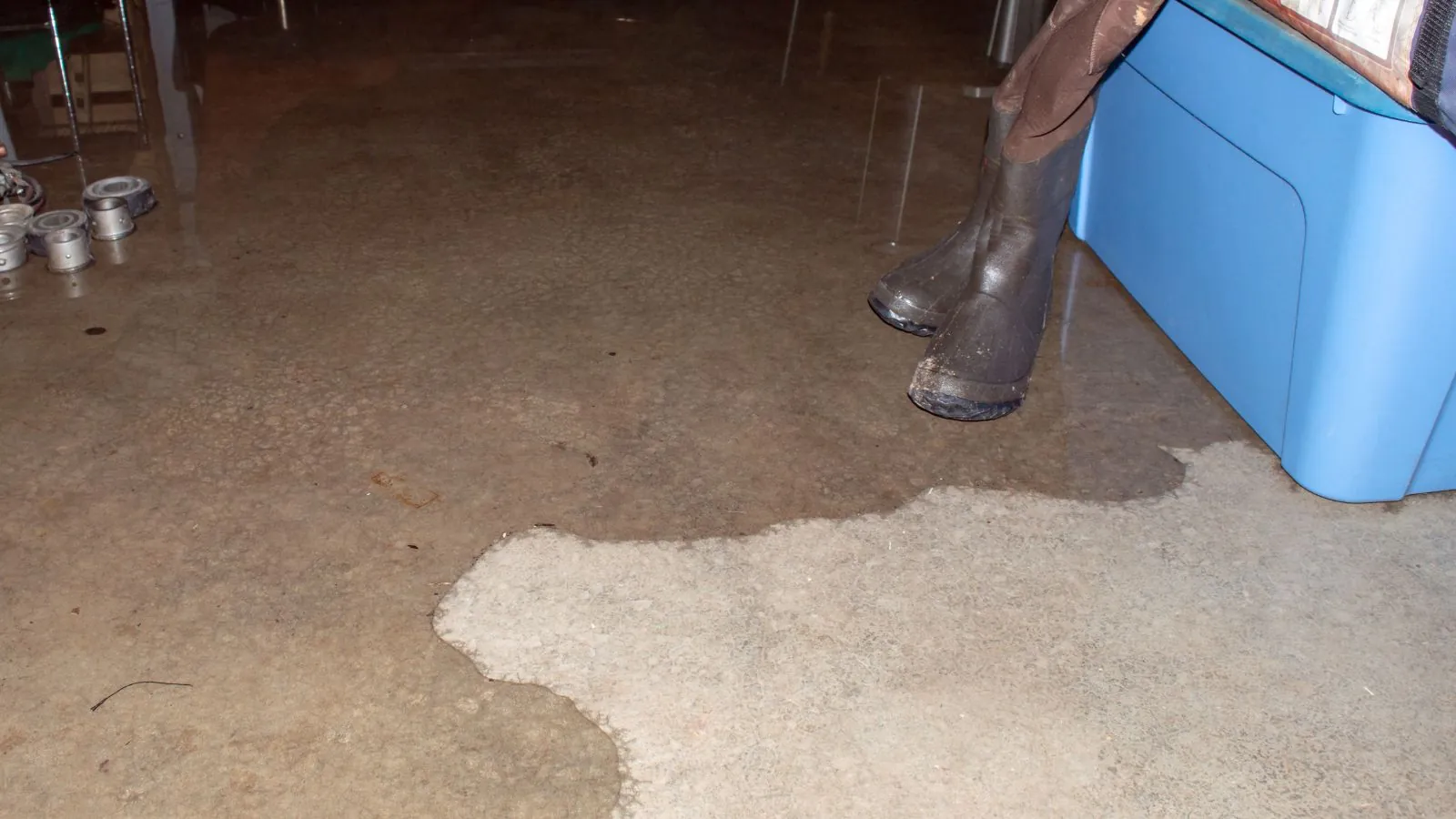
When a wet basement is an emergency
A basement holds water that cannot drain on its own, and it often contains the furnace, the water heater and the electrical panel. If water is rising, treat it as an emergency, because it climbs the walls, soaks stored items and affects equipment. The phone line is open 24/7, and storms rarely wait for business hours.
Stay out of a flooded basement if the water is deep or if outlets, cords or the panel sit in or near it. Do not go down the stairs to check. If the water is shallow and the panel is dry and reachable upstairs, you can cut power to the basement circuits from there. Call the utility for any electrical concern.
Power, gas and deep basement water
A furnace or water heater in flood water can carry electrical and gas hazards. Do not enter, do not relight pilot lights and do not run a generator in the house or garage.
If you smell gas, leave the house and call 911 from outside.
Where basement water comes from
Rain is the usual culprit in Clark County, where the rainy season runs from October through March according to the county. Water enters through floor cracks, wall joints, window wells and failed sump systems, and it also arrives from inside, through a burst line, a failed water heater or a backed-up floor drain.
Many people ask about waterproofing. Restoration is not waterproofing. We remove water and dry the structure, but we do not install drainage or repair foundations. If water keeps returning, a drainage or foundation contractor is the right next call after drying is done.
| Source | Water type | How the job changes |
|---|---|---|
| Rain seeping through walls or floor | Often gray or contaminated by soil | Porous materials usually removed, cleaning added |
| Sump pump failure | Groundwater | Fast extraction, then drying of walls and framing |
| Water heater or supply line | Clean at first | Dry in place is more likely when caught early |
| Floor drain or sewer backup | Contaminated | Follows the safety steps on the sewage page |
How basement cleanup proceeds
Safety check
Power, gas and structural concerns are checked before work begins.
Pump and extract
Deep water is pumped out, then carpet and pad are extracted or removed.
Open walls if needed
Baseboards and the lower drywall may be cut back so wall cavities can dry.
Dry and verify
Air movers and dehumidifiers run until meters match dry reference readings.
Finished basements need extra care. Carpet over concrete, framed walls with insulation, built-in cabinets and stored belongings all react differently to water. Insulation in the lower wall cavity usually has to be replaced once it is wet, and the drying of concrete takes longer than the drying of drywall.
What affects the cost
The cost of basement cleanup varies with the room and the water. Expect these factors to shape the estimate:
- Depth of water and the square footage of the basement
- Whether the water is clean, gray or contaminated
- Finished materials such as carpet, pad, drywall and insulation
- Contents that must be moved or discarded
- Days of drying and equipment on site
- Repairs left, like drywall and paint
Call (833) 521-1033 and tell us how deep the basement water is and what is down there.
Insurers draw a line between a failed sump pump or burst pipe, which are often covered, and groundwater or surface flooding, which usually needs a separate flood policy. Some policies also add sump or sewer backup coverage as an extra, so look for that wording.
Related pages and where we serve
If the water reached the whole house, the flood damage cleanup page explains the broader process. If it came from the drain, read about sewage backup cleanup before touching anything. Drying details live on the structural drying page.
We take calls from Battle Ground, Yacolt, La Center, Vancouver and Brush Prairie and the roads between them.
Questions people ask
Do you handle basement water emergencies at night or on weekends in Battle Ground?
Yes. Basement flooding often happens during overnight storms, so the line is answered 24/7. We explain the safety steps and next actions whatever the hour.
Will you waterproof my basement?
No. We restore after water damage, which means removing water, drying and cleaning. If water keeps coming in, a drainage or foundation contractor handles the cause once the basement is dry.
What should I do about a failed sump pump?
If the pump has stopped and the pit is full, call right away. Keep clear of electrical connections in wet areas. A replacement pump is a plumbing or drainage job, and we focus on removing the water and drying the space.
Can finished basement walls be saved?
Often the drywall above the water line can be saved, while the lower section and insulation are removed. A technician checks the wall cavity with moisture meters before deciding.
Is a wet basement the same as a flood?
Not always. A burst line or failed pump is a source-specific loss, while a rising water table or storm runoff is flooding. The distinction matters for insurance, so describe the cause carefully when you call your insurer.