
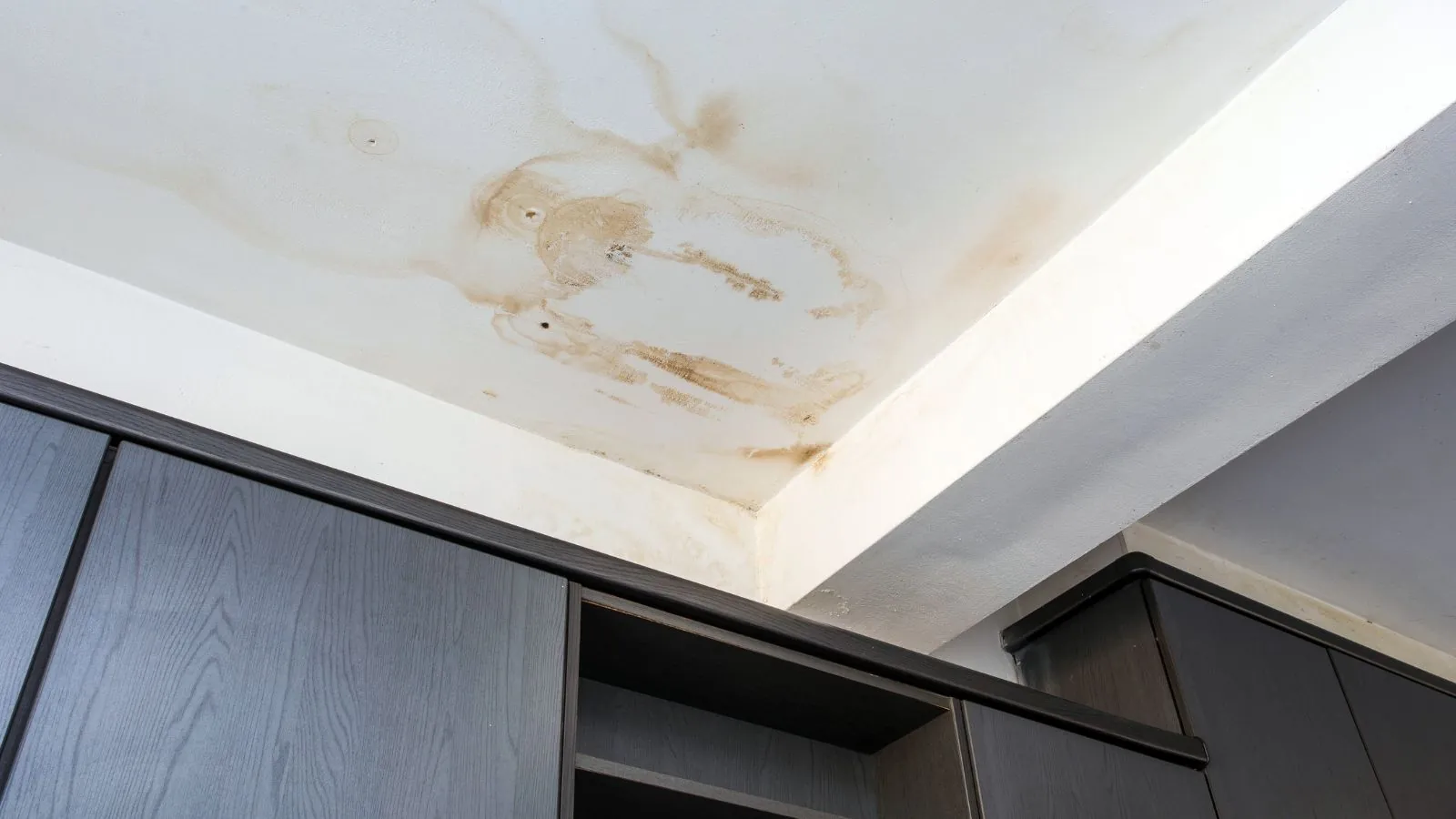
When a wet ceiling is an emergency
A ceiling that sags, bulges or drips is holding water, and that water has weight. Drywall soaked by a roof leak or a bathroom above can come down without warning. Our phone line is open 24/7, so call at night or on a weekend, because a ceiling that looks stable at bedtime may not be by morning.
The published ANSI/IICRC S500 standard treats wet ceiling material by the category of the water above it, which is why clean supply line water and a roof leak that crossed insulation are not handled the same way.
Move people, pets and furniture out from under the wet area. Place a bucket under any steady drip. If the ceiling bulges, do not stand beneath it, and never puncture it unless you are told how to do it safely. Photograph the stain and its edges so you can see whether it grows.
Water above electrical fixtures
Light fixtures, ceiling fans and recessed lights in a wet ceiling can carry water into wiring. If water is dripping from a fixture, stay clear and switch off the circuit only if you can reach the panel dry.
Call 911 or the utility for any sparking, burning smell or buzzing before calling the restoration line.
What causes ceiling water damage
The ceiling shows the damage, but the source sits above it. Common causes include a roof leak through decking and insulation, an upstairs toilet or tub, a failed supply line, a condensate line from an air handler in the attic, and a leaking drain. The stain tells you where water landed, not always where it entered.
| What you see | What it often points to | First step |
|---|---|---|
| Brown ring that grows after rain | Roof or flashing leak | Photograph it and call to plan drying |
| Stain under a bathroom | Tub, shower or toilet supply or drain | Stop using that fixture and shut off its valve |
| Bubbling paint and a bulge | Water trapped above the drywall | Keep clear and call right away |
| Drip in dry weather | Plumbing or HVAC condensate | Shut off the main valve and call |
Roof leaks that reach the ceiling
A plain roof leak is repaired by a roofer, and we do not do roofing. What we handle is the water damage it leaves: wet insulation, soaked ceiling drywall and framing that has to dry before anything is closed up. Fix the roof first or arrange a temporary cover, because drying a ceiling under an open leak does not hold.
In Clark County, rain is frequent from fall into spring, and a small leak can run through several storms before anyone sees a stain. After heavy weather, a quick look at ceilings in the top floor and under any roof valley can catch it early.
Stop and protect
Contain the drip, move contents and cover floors.
Open and inspect
Cut a controlled opening to relieve water and check the cavity with moisture meters and thermal imaging.
Remove and dry
Wet insulation and drywall come out, and air movers dry the framing.
Plan the repair
A written scope covers drywall, texture and paint once readings are normal.
What changes the cost of ceiling repair
Small stains and collapsed ceilings sit at opposite ends. These are the factors that decide where yours lands:
- The size of the wet area and whether the ceiling has sagged
- Wet insulation above, which must usually be replaced
- Whether the source is clean water or has run through dirty insulation
- Texture and paint matching on the finished ceiling
- Access, such as vaulted ceilings or a ceiling over stairs
To talk through your ceiling, call (833) 521-1033 and tell us where the stain is and how big it has grown.
A ceiling that was soaked by a sudden storm or a failed supply line is often covered, while a stain from a leak that ran for months often is not. Flood water is a separate matter. Your policy wording decides, so read it or ask your insurer before repairs begin.
Related work and service area
Water that ran down inside a wall continues to the wall and drywall repair page, and the drying process is explained under structural drying. A leak that began in an upper unit may also involve a kitchen below. We serve Battle Ground and the nearby towns of Yacolt, Brush Prairie, Vancouver and La Center.
Questions people ask
Do you handle ceiling water damage emergencies at night or on weekends in Battle Ground?
Yes. A sagging ceiling is urgent at any hour, and the line is answered 24/7. We can explain how to keep people safe and what to protect while a crew is arranged.
Should I poke a hole in a bulging ceiling to let the water out?
Not on your own. Water can come out all at once, and a wet ceiling may carry live wiring. A technician opens it in a controlled way, so call first and stay out from underneath.
Can a brown stain simply be painted over?
Painting over a stain hides it but does not dry the framing or stop moisture from continuing to damage the material. Stains can bleed through paint, and wet insulation can sit unnoticed above the drywall.
Do you repair roofs?
No. We handle the water damage inside the building. A roofer repairs or covers the roof, and we coordinate the drying and ceiling repair around that work.
How do I know if the ceiling is still wet after the leak stops?
Moisture meters and thermal imaging show wetness you cannot feel. Drywall can look dry on the surface while the insulation and framing above are still damp.