
Why do my walls and floors still feel damp?
If a room smells musty a few days after a leak, or baseboards feel cool and damp, the water may have moved into places you cannot see. Standing water is gone, but moisture stays inside drywall, framing, subfloor and insulation. The trade term for the fix is structural drying, and it is what turns a wet building back into a dry one.
The ANSI/IICRC S500 standard is the published reference for structural drying. It ties equipment placement to the class of the loss, meaning how much wet material there is and how fast it gives up moisture, and it expects readings to be logged until the materials reach their dry goal.
What structural drying means
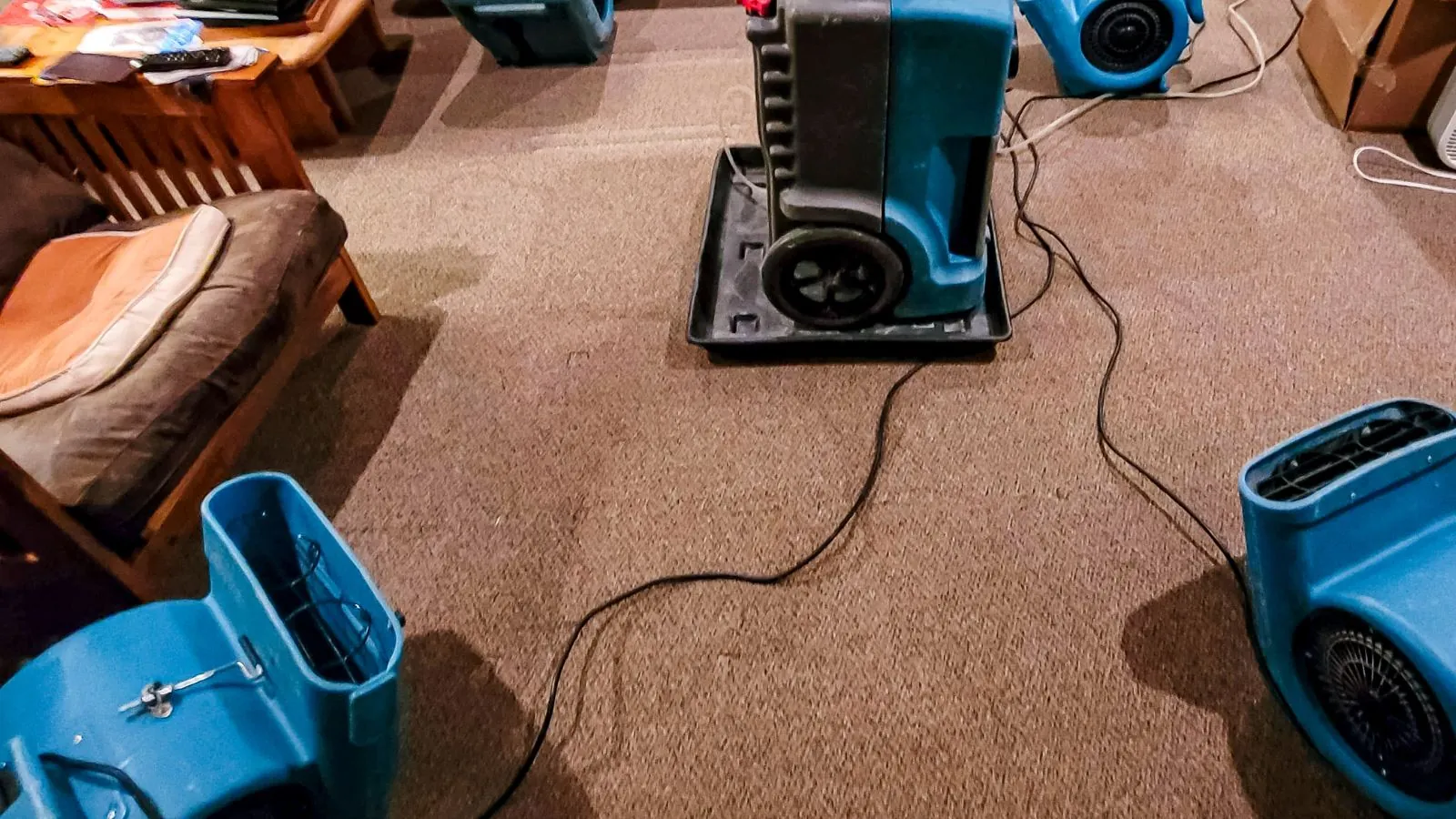
Structural drying is the controlled removal of moisture from building materials after water has been extracted. It uses air movers to move air across wet surfaces and dehumidifiers to pull moisture out of the air. Technicians read moisture meters at set points each visit and adjust equipment until the readings match dry reference values.
This is also what the industry calls water mitigation. The goal is to stop further damage and bring materials back to a normal moisture level, so repair can begin on dry framing.
Moisture mapping
A meter and thermal camera mark where water traveled, including behind walls.
Equipment placement
Air movers and dehumidifiers are sized to the volume and the wet area.
Daily monitoring
Readings are logged at fixed points, and equipment is moved as areas dry.
Dry verification
Drying ends when readings match dry reference values, not when a set number of days has passed.
The equipment, in plain words
| Equipment | What it does | Where it helps most |
|---|---|---|
| Air movers | Push air across wet surfaces to speed evaporation | Carpet, floors, lower walls |
| LGR dehumidifiers | Pull moisture from the air so it keeps evaporating | Whole rooms and closed buildings |
| Moisture meters | Read the moisture level inside materials | Drywall, wood and subfloor |
| Thermal imaging camera | Shows cool wet areas behind finishes | Walls and ceilings |
| Panel and cavity drying systems | Push dry air into wall cavities or under floors | Hardwood and wall cavities |
Equipment is used on the job and is not rented out to homeowners. Renting a few fans and a dehumidifier without readings is a common reason walls stay wet. Drying time depends on how wet the materials were, how dense they are and how much airflow can reach them, so it is measured in readings rather than days.
How long does drying take?
Many jobs take several days, and dense materials such as hardwood, framing and concrete take longer than carpet or drywall. Weather matters too. Clark County has a long rainy season, and humid outdoor air makes drying slower, so dehumidifiers do much of the work indoors.
Technicians keep windows closed and the building at a stable temperature while equipment runs. That is why the noise and the warmth in the house are part of the process and not a sign something is wrong.
What affects the cost of drying
Drying cost is based on what has to be dried and for how long. The main factors are:
- Square footage and ceiling height of the wet area
- How many materials were wet, and how dense they are
- How many air movers and dehumidifiers the layout needs
- Number of monitoring visits and days on site
- Whether walls or floors must be opened to reach wet cavities
Questions about how long your walls and floors will take? Call (833) 521-1033 and describe what got wet.
Drying is usually part of a covered loss when the water came from something sudden and accidental, such as a burst line. Gradual leaks and neglect often are not covered, and flood damage usually needs separate flood insurance, so ask your insurer how your policy treats the cause.
Where drying fits in a job, and where we serve
Drying usually follows water extraction and comes before repair. It is the main step after a burst pipe in a wall, and it is how hardwood floors are given a chance to recover. We serve Battle Ground, La Center, Brush Prairie, Yacolt and Vancouver.
Questions people ask
What is the difference between drying and water mitigation?
They describe the same goal. Water mitigation means stopping further damage, and structural drying is the main method used. The term appears on the homepage and here because customers search both.
Why not just run a few fans?
Fans move air, but without dehumidification the moisture just moves around. Meters tell you when drying is complete, which fans alone cannot do.
Do you rent out air movers and dehumidifiers?
No. Equipment is placed and monitored by our crew as part of a drying job.
Can wet drywall be dried in place?
Sometimes. If the drywall is not contaminated, has not swollen and the water was clean, drying in place can work. Otherwise it is cut out. Meters tell you which case you have.
Do I need drying if the water was cleaned up right away?
It is worth checking. Water can move into wall cavities and under floors even after the surface is dry. A moisture check is quick and shows whether more drying is needed.