
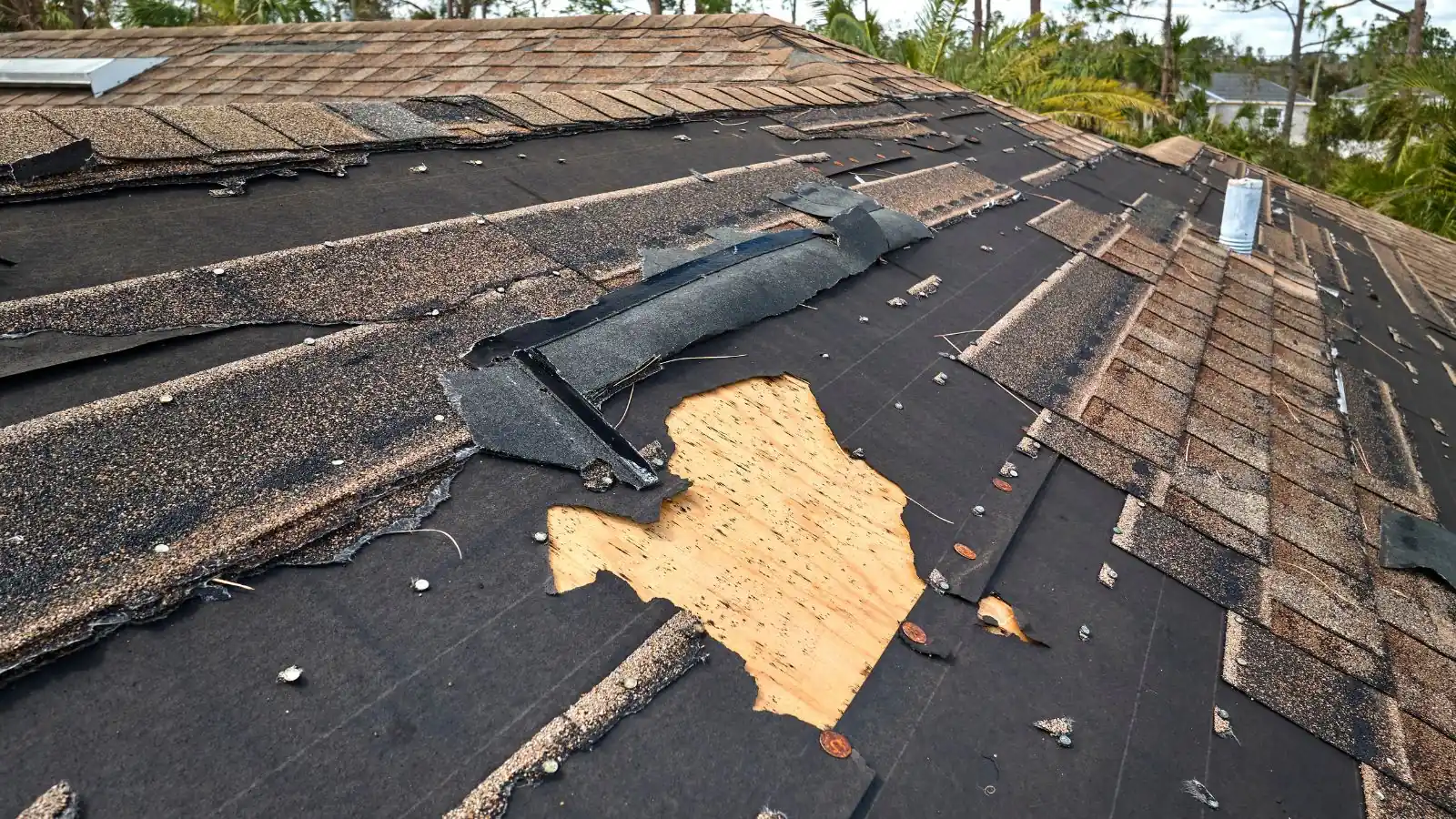
When storm water is an emergency
Storm water becomes an emergency when it is inside your home and still entering. Wind-driven rain can find missing shingles, failed flashing and window seals within minutes. The phone line is open 24/7, including during storms, so call as soon as you can safely do so.
The published ANSI/IICRC S500 standard generally treats water that came in from outdoors, through a roof, a window or across the ground, as more contaminated than a clean pipe leak, and that changes what can be dried and what must be removed.
Stay clear of any area with a sagging ceiling or active drips near electrical fixtures. Catch drips with buckets, move furniture away from wet walls and photograph damage as it appears. If the roof is damaged, a temporary tarp can be arranged by a roofer.
Storm hazards
Do not climb onto a wet roof. Watch for downed lines outside and treat any wire as live.
If water has reached outlets or the panel, stay out of that room and call the utility.
What to do before help arrives
Stay out of any room where water is near outlets or where ceiling material is sagging. Keep clear of downed power lines and do not wade through water that came in from outside, because it can carry soil and sewage.
Do not run a household vacuum on wet floors and do not turn on ceiling fixtures under a wet ceiling. Photograph the damage and the roof or window opening if you can do it safely from the ground.
Storm patterns around Battle Ground
Clark County describes an October through March rainy season, and the western slope of the Cascades brings steady rain and occasional wind events. Battle Ground sits where SR 502 and SR 503 meet, with tree-lined streets and many homes with older roofs. Falling limbs and clogged gutters are frequent causes of leaks.
Spring snowmelt from April through June can raise river levels as well, and Clark County reported high flows damaging the Lewisville Regional Park boat launch in the winter of 2024. A look at the FEMA Flood Map Service Center helps if you are unsure of your exposure.
| Storm damage | Typical entry point | What we handle |
|---|---|---|
| Roof leak | Missing shingles or flashing | Wet insulation, ceilings and walls |
| Wind-driven rain | Window seals and siding gaps | Wet walls and flooring |
| Backed-up gutters | Overflow at the eaves | Soaked soffits and wall cavities |
| Surface water | Doors, garages and window wells | Standing water on floors |
Make it safe
Hazards are identified and water entry is limited.
Extract and protect
Standing water is removed and contents are moved.
Dry and monitor
Equipment runs while moisture meters track progress.
Document
Photos, readings and a written scope support your insurance claim.
A roofer repairs the roof, and we do not do that. For a ceiling that has already been stained, see ceiling water damage repair, and for deeper flooding read flood damage cleanup.
What to photograph and keep
Before anything is moved, photograph the wet areas, the entry point if you can see it and any damaged belongings. Keep damaged items that can be inspected, and write down when you first noticed water. Those notes help your insurer understand what happened and when.
If a tree limb hit the roof or siding, photograph the outside from the ground as well. Do not climb up to inspect it yourself in wet weather.
What affects the cost
Storm damage ranges from a few wet ceiling tiles to flooded floors. These factors matter:
- How much water entered and how long it sat
- Which materials were soaked
- Whether roofing or siding repairs are needed first
- The days of drying
- Repairs left after drying
Call (833) 521-1033 when it is safe and tell us where the storm water got in.
Wind and rain that enter through storm damage to the roof are often covered, while a roof that leaked from age and wear often is not. Flood water from the ground or a river usually needs a separate flood policy. Check your policy and report the loss promptly.
Where we work
We respond to storm calls in Battle Ground, Brush Prairie, Yacolt, La Center and Vancouver.
Questions people ask
Do you handle storm water damage emergencies at night or on weekends in Battle Ground?
Yes. Storms rarely wait for business hours, so the line is open 24/7. Call when it is safe and describe what is wet.
Will you put a tarp on the roof?
Roof work is not our service. A roofer can place a temporary cover, and we can coordinate drying around that work.
Does homeowners insurance cover storm damage?
Wind and rain damage to the home is often covered, while flood damage usually needs a separate flood policy. Check your policy for details and deductibles.
How soon after a storm should I call?
As soon as it is safe. Water that sits in insulation and drywall can damage them within days.
Is storm water contaminated?
Rain through a roof is usually clean at first, but surface water or runoff can carry soil and bacteria. The cleanup approach depends on the source.