
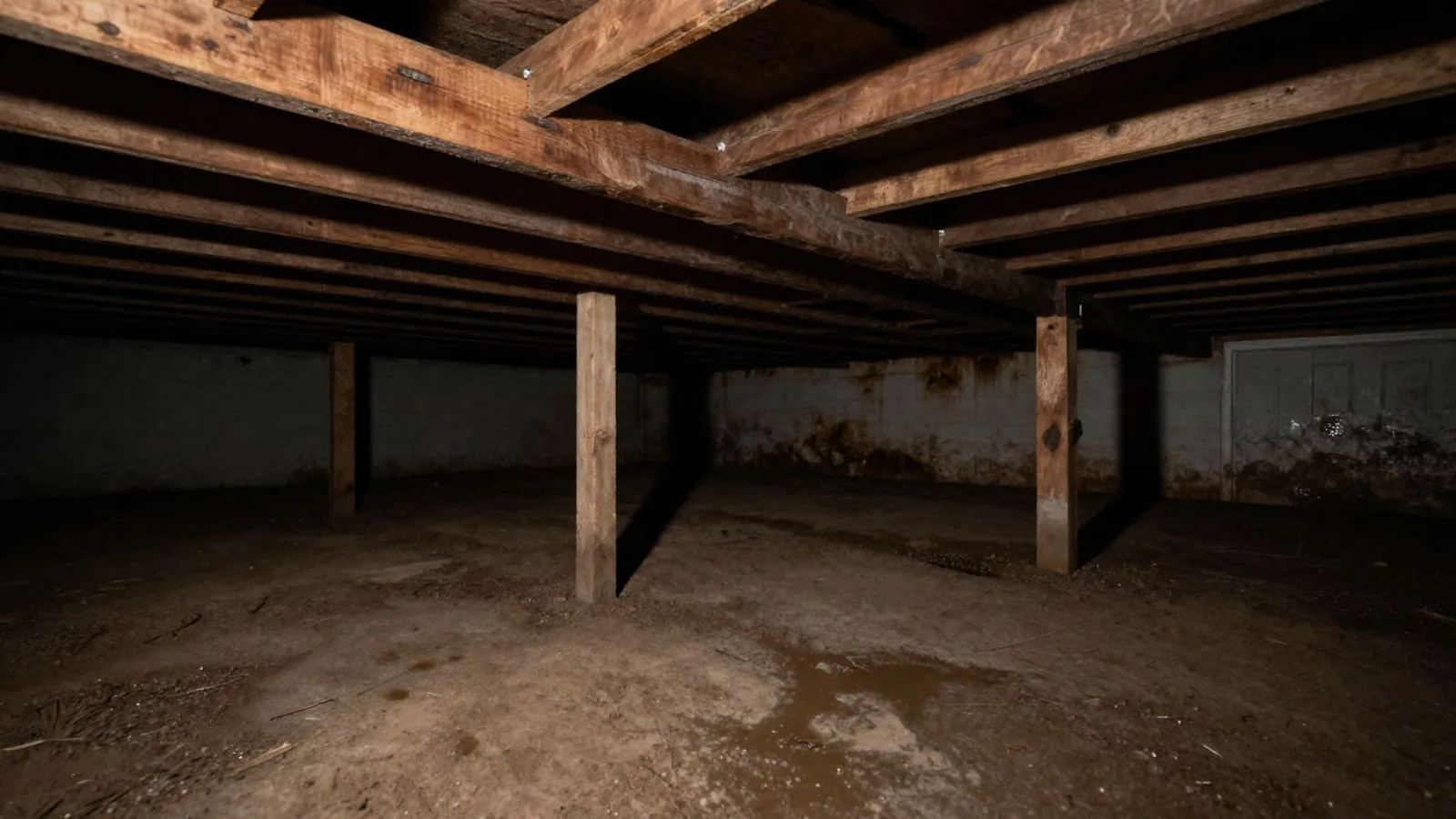
Why crawl spaces take on water
A crawl space sits close to the ground, so it collects rain, groundwater and plumbing leaks. In Clark County, the county describes a rainy season from October through March, which is when many crawl spaces flood. A plumbing leak above can also drip down and pool below.
The published ANSI/IICRC S500 standard is the reference for deciding how to treat wet insulation, subfloor and framing, and crawl spaces matter because water that stays in contact with soil and framing is rated as more contaminated than clean pipe water.
Signs include a musty smell inside the house, cold floors, sagging insulation and standing water when you open the access hatch. If water is deep, do not enter. Wet ground and electrical lines are a bad combination.
Entering a wet crawl space
Do not enter a crawl space with standing water or exposed wiring. Treat any electrical line near water as live.
If the water might be sewage, stay out and follow the guidance on the sewage backup page.
| What you find | Likely cause | What we do |
|---|---|---|
| Standing water | Rain, groundwater or a plumbing leak | Pump it out and map the moisture |
| Wet or fallen insulation | A leak above or high humidity | Remove wet insulation and dry the joists |
| Damp joists and subfloor | Long exposure to moisture | Dry with monitoring and report concerns |
| Musty odor in the house | Chronic moisture below | Dry the space and note what to check next |
How crawl space cleanup works
Check the space
A technician checks safety, depth and the source of water.
Pump and extract
Standing water is pumped out and wet materials are removed.
Dry the framing
Air movers and dehumidifiers dry joists, subfloor and any ducts.
Report
A written scope notes what was dried, what was removed and what repair is left.
Restoration is not waterproofing. We dry and clean the space, and a drainage contractor addresses water that keeps returning. Vapor barriers, drains and sump pumps are separate trades.
Water in a crawl space can come from a burst pipe above, and the frozen pipe page covers how freezing causes that. Drying details are on the structural drying page.
What a technician checks before work starts
A crawl space job begins with the source. Water from a plumbing leak is treated differently from groundwater, and sewage means a different set of safety rules. The technician looks for wiring, ductwork and plumbing in the space, and checks the depth, the floor surface and the insulation.
Moisture readings on the joists and subfloor show how deep the problem goes. High readings on framing mean the damage has been building for some time, even if the standing water is new.
Why ductwork and insulation matter
Many homes have heating ducts running through the crawl space, and a flooded space can soak insulation wrapped around them. Wet insulation is heavy and falls, which pulls vapor barriers and ducts out of place. A quick walkthrough after drying catches damage that is easy to miss from the hatch.
What affects the cost
Crawl space jobs vary with access and water depth. The main factors are:
- Depth and source of the water
- How tight or tall the crawl space is
- Wet insulation to be removed
- The days of drying
- Whether a plumbing leak or drainage problem needs another contractor
Call (833) 521-1033, describe what you see through the access hatch and we will explain what comes next.
Water from a sudden plumbing failure under the house is often covered, while groundwater seeping in over a wet season usually is not, and flood needs its own policy. Gradual moisture from neglect is often excluded, so read your policy and ask your insurer.
Service area
We serve crawl spaces in Battle Ground, Yacolt, La Center, Brush Prairie and Vancouver.
Questions people ask
Do you handle crawl space water emergencies at night or on weekends in Battle Ground?
Yes. The line is answered 24/7. If you see water pooling or hear it running under the house, call and shut off the main valve.
Is a damp crawl space a problem if I do not see water?
It can be. Chronic moisture can soak insulation and joists over time, and a musty smell inside the house is a clue. A moisture check will tell you more.
Do you install vapor barriers or drains?
No. We dry and clean after water damage. Drainage and vapor barrier work is a separate trade.
Do I have to be home?
Access is needed, so someone should be there or arrange entry. Call and we will explain how it works.
Is mold a worry in a wet crawl space?
It can be if moisture lingers. Fast drying reduces the risk, and a technician can note what to ask a mold specialist about.